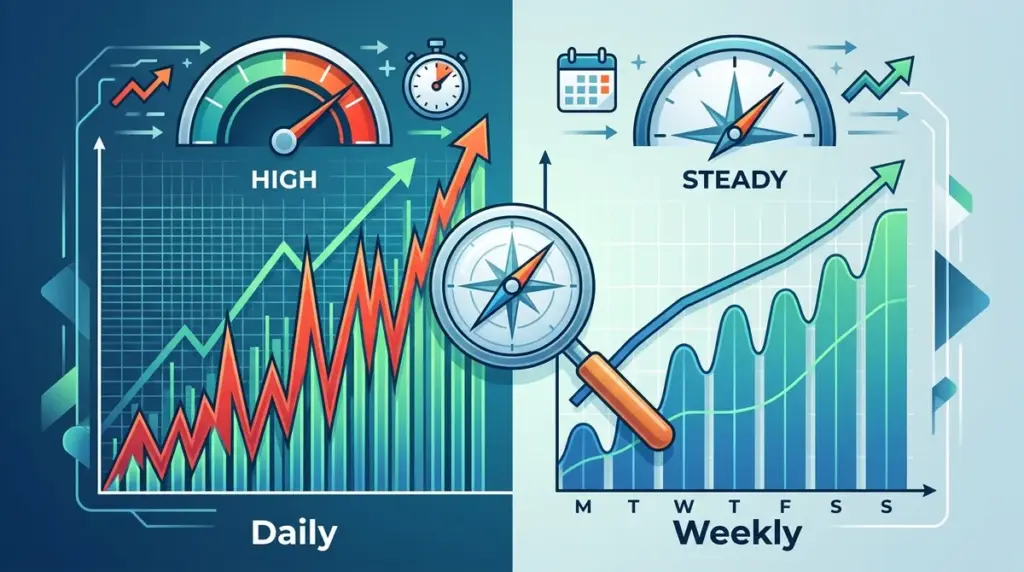
The debate between daily and weekly rank tracking is often framed as a choice between data volume and data clarity. For an SEO professional managing a high-traffic e-commerce site, a weekly update is a lagging indicator that can mask a catastrophic drop for five days too long. Conversely, for a niche B2B blog, daily tracking can create "data noise" that triggers unnecessary panic over standard SERP volatility. Choosing the right frequency requires a cold assessment of your site’s volatility, your reporting obligations, and the speed at which your competitors move.
The Strategic Necessity of Daily Rank Tracking
Daily tracking is the industry standard for competitive niches where SERP features change hourly. If you are targeting high-intent commercial keywords, Google frequently tests different layouts—swapping featured snippets for People Also Ask (PAA) boxes or shifting local pack placements. Daily data allows you to isolate whether a ranking drop is a systemic loss of authority or a temporary fluctuation caused by a Google experiment.
Best for: E-commerce brands, news publishers, and agencies managing high-spend accounts where a 24-hour drop in a "money" keyword results in measurable revenue loss.
Daily updates are essential during three specific scenarios:
- Core Algorithm Updates: When Google rolls out a broad core update, rankings can swing wildly for 14 days. Daily tracking allows you to map the "recovery" or "descent" curve in real-time, providing the data needed to reassure stakeholders.
- New Content Launches: Tracking a new URL daily helps identify how quickly Google is indexing and testing your content against established competitors.
- Aggressive A/B Testing: If you are testing title tags or meta descriptions to improve CTR, you need daily feedback to see if the changes impacted your position before the next crawl cycle.
Warning: Daily tracking can lead to "micro-management fatigue." Reacting to a two-position drop on a Tuesday that recovers by Thursday wastes resources. Use daily data to identify patterns, not to justify hourly tactical shifts.
When Weekly Tracking Provides Better Clarity
Weekly rank tracking is not a "budget" version of SEO monitoring; it is a filter. For many long-term SEO strategies, daily fluctuations are irrelevant. A weekly snapshot smooths out the "Google Dance"—the temporary instability that occurs when Google’s data centers are syncing. By looking at data once a week, you see the true trend line of your organic growth without the distraction of daily tremors.
Best for: Informational blogs, B2B SaaS with long sales cycles, and local businesses in low-competition geographies.
In these environments, the primary goal is long-term authority building. If your content sits in the top three positions for months at a time, checking it every 24 hours offers zero incremental value. Weekly tracking reduces the "noise-to-signal" ratio, making it easier to present a clean growth chart to clients who might otherwise worry about minor daily dips.
The Cost of Latency in High-Stakes SEO
The primary risk of weekly tracking is latency. If your site suffers a partial manual action or a technical glitch—such as a developer accidentally adding a "noindex" tag to a high-value directory—weekly tracking could leave you blind to the issue for up to six days. In a high-volume environment, that delay can be the difference between a minor dip and a quarterly revenue miss. If you choose weekly tracking, it must be supplemented with real-time technical monitoring (like 404 error alerts) to catch site-wide failures that rank trackers would eventually report.
Data Granularity and SERP Feature Movement
Modern SEO is no longer just about blue links. It is about capturing "real estate" in the form of images, videos, and AI Overviews. These features are notoriously unstable. A daily tracker captures the appearance and disappearance of these elements, providing insight into which types of content Google prefers for specific queries on different days of the week.
For example, Google often prioritizes "freshness" for certain queries on weekends or during specific news cycles. Weekly tracking might miss these nuances entirely, leading you to believe your ranking is stable when, in reality, you are losing the "above the fold" visual space to dynamic SERP features during peak traffic hours.
Operational Efficiency: Agency vs. In-House
Agencies often prefer daily tracking because it provides a more robust dataset for end-of-month reporting. Being able to show a client that a mid-month dip was corrected within 48 hours builds trust. In-house teams, however, may find that weekly tracking keeps the team focused on "big rock" projects rather than chasing daily algorithm ghosts. The decision often comes down to the frequency of your reporting cycle: if you report weekly, you need daily data to explain the week's performance. If you report monthly, weekly data is usually sufficient to tell the story.
Developing Your Tracking Cadence
The most effective strategy is often a hybrid approach. You do not need to track every keyword at the same frequency. Segment your keyword portfolio into tiers to balance cost and insight:
- Tier 1 (Money Keywords): Track daily. These are the 10-50 keywords that drive 80% of your conversions.
- Tier 2 (Growth Keywords): Track weekly. These are keywords you are currently optimizing or that drive significant top-of-funnel traffic.
- Tier 3 (Long-tail/Research): Track monthly or weekly. These are low-volume terms used for topical authority and broad visibility.
This tiered approach ensures that you are alerted immediately to threats against your primary revenue drivers while maintaining a high-level strategic view of your overall organic footprint.
Choosing the Right Frequency for Your Goals
To determine your tracking needs, evaluate your "Time to Action." If your team can realistically respond to a ranking drop within 24 hours by adjusting content, fixing technical debt, or shifting ad spend, then daily tracking is a mandatory investment. If your organizational structure means it takes two weeks to push a change through legal and development, daily data is an unnecessary distraction that provides information you cannot act upon.
Prioritize daily tracking if your industry is prone to rapid disruption—such as finance, health, or tech news. Stick to weekly tracking if your primary goal is steady, sustainable growth and you want to avoid the emotional volatility of the SERPs.
Frequently Asked Questions
Does daily tracking impact my site's performance?
No. Professional rank tracking tools use cloud-based crawlers that simulate user behavior without putting any load on your server. They do not "hit" your site directly in a way that affects page speed or server health.
Will tracking daily help me rank faster?
Data frequency does not influence Google's algorithm. However, daily tracking helps you identify what is working (and what isn't) much faster, allowing you to iterate on your SEO strategy more frequently than a competitor who only checks their progress once a week.
Should I switch from weekly to daily during a site migration?
Absolutely. During a migration, daily tracking is critical for the first 30 days. You need to see exactly how Google is transitioning authority from old URLs to new ones and identify any mapping errors or "orphan" pages that aren't regaining their previous positions quickly.
Why do my daily rankings change even when I haven't touched the site?
Google uses a distributed network of data centers. Depending on which data center your tracker hits, and because Google constantly tests user intent via "rank transitions," your position can fluctuate by 1-3 spots naturally. This is why looking at the 7-day or 30-day average is often more useful than a single day's data point.